

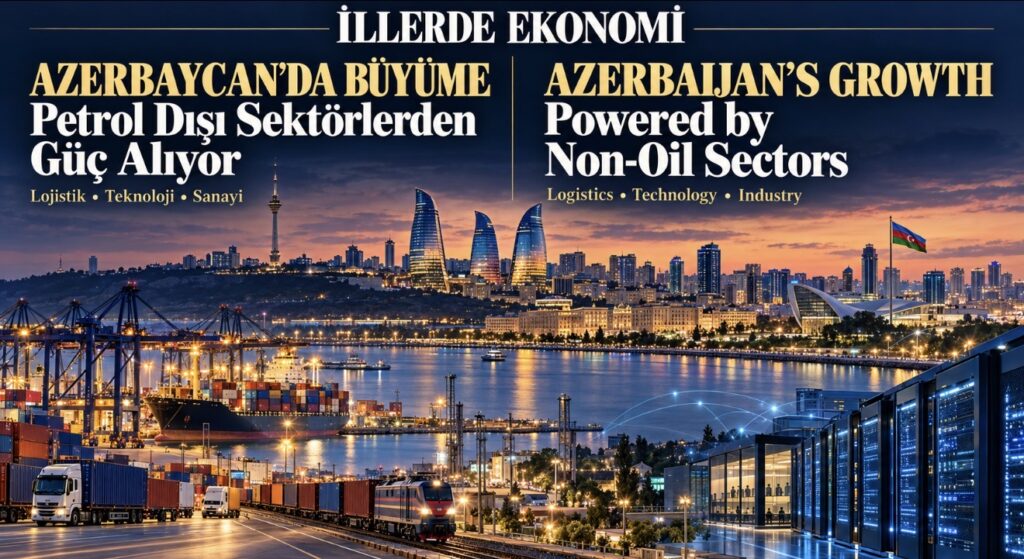
Ocak–ağustos verileri, petrol ve doğal gaz dışı faaliyetlerin büyümeyi desteklediğini ortaya koyuyor. Bilgi ve iletişim ile taşımacılık hizmetleri dikkat çekiyor.
İLLERDE EKONOMİ | 7 Ekim 2026
Azerbaycan Devlet İstatistik Komitesinin 9 Eylül tarihli makroekonomik tablosuna göre, ülke ekonomisi 2026’nın ocak–ağustos döneminde yıllık yüzde 1,2 büyüdü. Petrol ve doğal gaz sektöründe yüzde 0,8 daralma yaşanırken, petrol ve doğal gaz dışı ekonomi yüzde 2,1 genişledi.
Aynı dönemde petrol ve doğal gaz dışı sanayide yüzde 5,4, taşımacılık ve depolama hizmetlerinde yüzde 8,7, bilgi ve iletişim hizmetlerinde yüzde 10,7 büyüme kaydedildi. (stat.gov.az)
Ekonomik değerlendirme: Veriler, Azerbaycan’ın ekonomik çeşitlenme sürecinde hizmetler ve petrol dışı sanayinin önem kazandığını gösteriyor. Bununla birlikte, bu sektörlerin büyümesi tek başına enerji gelirlerine bağımlılığın sona erdiği anlamına gelmiyor.
Türkiye ile ekonomik ilişkiler açısından lojistik, dijital hizmetler ve sanayi tedarik zincirleri daha yakından incelenebilecek işbirliği alanları oluşturuyor. Kalıcı büyüme için belirleyici unsur, sektörel genişlemenin verimlilik artışına, sürdürülebilir istihdama ve rekabetçi ihracata dönüşmesi olacak.
Azerbaijan’s Non-Oil Sectors Support Economic Growth
January–August figures show that activities outside oil and gas supported economic expansion, with information and communication and transport services standing out.
İLLERDE EKONOMİ | October 7, 2026
According to the State Statistical Committee’s macroeconomic table dated September 9, Azerbaijan’s economy expanded 1.2% year on year in January–August 2026. Oil and gas activity contracted 0.8%, while the non-oil and gas economy grew 2.1%.
Non-oil and gas industrial output increased 5.4%, transport and storage services grew 8.7%, and information and communication services expanded 10.7%. (stat.gov.az)
Economic assessment: The figures highlight the growing importance of services and non-oil industry in Azerbaijan’s diversification efforts. Their expansion, however, does not by itself demonstrate that dependence on energy revenues has ended.
For economic relations with Türkiye, logistics, digital services and industrial supply chains offer areas for closer examination. Lasting progress will depend on translating sectoral growth into higher productivity, sustainable employment and competitive exports.