

Editör Yazısı | İllerde Ekonomi
25 Ağustos 2026
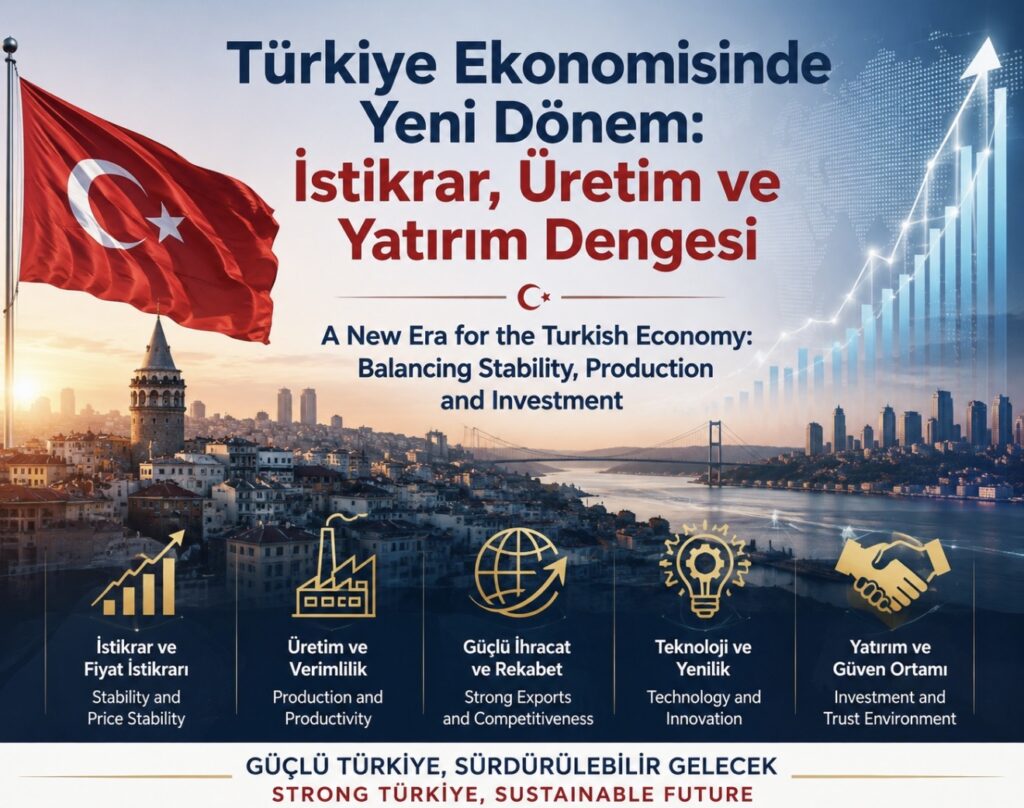
Türkiye ekonomisi, 2026 yılının ikinci yarısında fiyat istikrarı, üretim ve sürdürülebilir büyüme arasında yeni bir denge arayışına giriyor. Para politikasındaki sıkı duruş devam ederken, reel sektörün finansmana erişimi, yatırım ortamının güçlendirilmesi ve katma değerli üretimin artırılması ekonominin temel gündem maddeleri arasında yer alıyor.
Türkiye Cumhuriyet Merkez Bankası’nın Ağustos 2026 değerlendirmeleri, dezenflasyon sürecinin devam ettiğine ancak küresel ve jeopolitik gelişmelerden kaynaklanan risklerin sürdüğüne işaret ediyor. Merkez Bankası, 2026 yıl sonu enflasyon tahminini yüzde 28 olarak güncellerken sıkı ve ihtiyatlı para politikası duruşunun korunacağını vurguluyor.
Önümüzdeki dönemde Türkiye ekonomisinin performansında yalnızca enflasyonun seyri değil; üretim kapasitesinin korunması, ihracatın güçlendirilmesi, teknoloji yatırımlarının artırılması ve sermayenin uzun vadeli yatırımlara yönelmesi de belirleyici olacak.
Türkiye’nin gelişmiş sanayi altyapısı, Avrupa ile Asya arasındaki stratejik konumu, geniş dış ticaret ağı ve girişimcilik kapasitesi önemli ekonomik avantajlar sunuyor. Ancak bu potansiyelin sürdürülebilir büyümeye dönüşmesi; öngörülebilirliğin, yatırımcı güveninin ve ekonomik istikrarın güçlendirilmesine bağlı.
İllerde Ekonomi değerlendirmesine göre, önümüzdeki dönemin temel hedefi kısa vadeli büyüme rakamlarından ziyade; fiyat istikrarını, üretimi, ihracatı, teknolojiyi ve yatırımı aynı ekonomik çerçevede buluşturan sürdürülebilir bir büyüme modeli oluşturmak olmalıdır.
A New Era for the Turkish Economy: Balancing Stability, Production and Investment
Editorial | İllerde Ekonomi
25 August 2026
The Turkish economy is entering a new phase in the second half of 2026, seeking to establish a stronger balance between price stability, production and sustainable economic growth. While the tight monetary policy stance continues, access to finance for the real economy, improvement of the investment environment and expansion of value-added production remain among the country’s key economic priorities.
The Central Bank of the Republic of Türkiye’s assessments in August 2026 indicate that the disinflation process is continuing, while risks arising from global and geopolitical developments remain significant. The Central Bank revised its year-end inflation forecast for 2026 to 28 percent and emphasized its commitment to maintaining a tight and cautious monetary policy stance.
In the period ahead, Türkiye’s economic performance will depend not only on the course of inflation but also on maintaining production capacity, strengthening exports, expanding technology investment and directing capital toward long-term productive investment.
Türkiye’s established industrial infrastructure, strategic position between Europe and Asia, extensive international trade network and entrepreneurial capacity provide significant economic advantages. Transforming this potential into sustainable growth, however, will depend on strengthening predictability, investor confidence and overall economic stability.
From the perspective of İllerde Ekonomi, Türkiye’s central economic objective in the coming period should extend beyond short-term growth figures. The priority should be to establish a sustainable growth model that brings together price stability, production, exports, technology and investment within a coherent economic framework.