

İLLERDE EKONOMİ | Özel Analiz
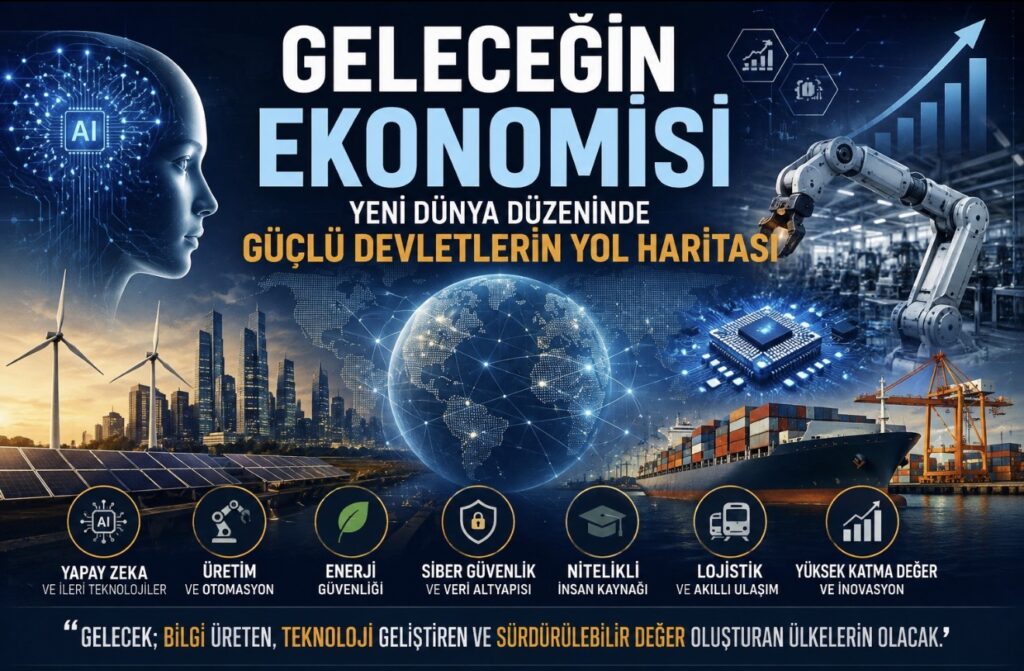
Dünya ekonomisi, sanayi devriminden bu yana yaşanan en kapsamlı dönüşüm süreçlerinden birine tanıklık ediyor. Küresel rekabet artık yalnızca düşük maliyetli üretim veya ucuz iş gücü üzerinden şekillenmiyor. Yapay zekâ, ileri teknoloji, veri ekonomisi, enerji güvenliği, dijital altyapı ve nitelikli insan kaynağı; ülkelerin ekonomik gücünü belirleyen temel unsurlar hâline geliyor.
Önümüzdeki on yıl içerisinde küresel ekonominin liderleri; daha fazla üretim yapan ülkelerden ziyade, yüksek katma değer üreten, teknoloji geliştiren, bilgi ekonomisini yöneten ve inovasyonu sürdürülebilir hâle getiren devletler olacaktır.
Küresel tedarik zincirlerinde yaşanan kırılmalar, jeopolitik gerilimler, enerji arz güvenliği ve dijital dönüşüm; ülkeleri ekonomik politikalarını yeniden şekillendirmeye zorluyor. Artık ekonomik büyümenin temel hedefi yalnızca üretim miktarını artırmak değil, krizlere karşı dirençli, sürdürülebilir ve yüksek teknolojiye dayalı bir ekonomik yapı oluşturmaktır.
Devletler Hangi Alanlara Öncelik Vermeli?
Geleceğin ekonomik rekabetinde başarı sağlayabilmek için kamu ve özel sektörün aşağıdaki stratejik alanlara öncelik vermesi büyük önem taşıyor:
- Yapay zekâ ve ileri yazılım teknolojileri
- Robotik sistemler ve endüstriyel otomasyon
- Yarı iletken (çip) üretimi ve elektronik sanayi
- Yenilenebilir enerji ile enerji depolama teknolojileri
- Savunma sanayii ve uzay teknolojileri
- Tarım teknolojileri ve gıda güvenliği
- Kritik madenler ve stratejik hammaddeler
- Siber güvenlik ve veri merkezleri
- Akıllı lojistik sistemleri ve dijital ulaşım altyapısı
- Bilim, mesleki eğitim ve nitelikli insan kaynağı
Bu alanlarda yapılacak yatırımlar yalnızca ekonomik büyümeyi değil; ulusal güvenliği, teknolojik bağımsızlığı ve küresel rekabet gücünü de doğrudan etkileyecektir.
Şirketler Yeni Döneme Nasıl Hazırlanmalı?
Yeni ekonomik düzende şirketlerin rekabet avantajı artık düşük maliyetten değil; teknoloji üretme kapasitesi, verimlilik, dijital dönüşüm ve inovasyon kabiliyetinden kaynaklanacaktır.
Yapay zekâ destekli üretim sistemleri, büyük veri analizi, otomasyon, dijital pazarlama ve ihracat odaklı büyüme stratejileri; küresel pazarlarda kalıcı başarı için vazgeçilmez unsurlar hâline gelecektir.
Ayrıca şirketlerin sürdürülebilirlik, çevresel sorumluluk ve kurumsal yönetişim ilkelerini iş modellerine entegre etmeleri, uluslararası pazarlarda rekabet avantajı sağlayacaktır.
Bireyler Geleceğe Nasıl Hazırlanmalı?
Bilgi ekonomisinin yükseldiği yeni dönemde en değerli sermaye, insanın bilgi ve yetkinliğidir.
Bu nedenle bireylerin;
- Dijital becerilerini geliştirmesi,
- Yapay zekâ araçlarını etkin şekilde kullanmayı öğrenmesi,
- En az bir yabancı dili ileri seviyede konuşabilmesi,
- Finansal okuryazarlığını artırması,
- Sürekli öğrenme kültürünü benimsemesi,
- Analitik düşünme ve problem çözme becerilerini geliştirmesi,
geleceğin iş dünyasında önemli bir rekabet avantajı sağlayacaktır.
Türkiye İçin Stratejik Fırsatlar
Türkiye; genç nüfusu, güçlü sanayi altyapısı, stratejik coğrafi konumu ve gelişen girişimcilik ekosistemi sayesinde küresel dönüşüm sürecinde önemli fırsatlara sahiptir.
Ancak bu potansiyelin ekonomik değere dönüşebilmesi için bilim, eğitim, Ar-Ge, yüksek teknoloji üretimi ve hukuk güvenliğini merkeze alan uzun vadeli kalkınma politikalarının kararlılıkla uygulanması gerekmektedir.
Yüksek katma değerli üretim, ihracatın teknoloji yoğun ürünlere yönlendirilmesi ve yerli inovasyon ekosisteminin güçlendirilmesi, Türkiye’nin küresel ekonomide daha üst sıralara yükselmesini sağlayacaktır.
Sonuç
- yüzyılın ekonomik liderleri; doğal kaynakları en fazla olan ülkeler değil, bilgiyi üreten, teknolojiyi geliştiren, inovasyonu destekleyen ve insan kaynağına yatırım yapan ülkeler olacaktır.
Ekonomik başarı artık yalnızca büyüme rakamlarıyla değil; teknolojik bağımsızlık, üretkenlik, sürdürülebilir kalkınma ve küresel rekabet gücüyle ölçülecektir.
Geleceğin ekonomisini şekillendirecek en büyük yatırım; beton değil, bilgiye; kısa vadeli kazançlar değil, bilim ve teknolojiye yapılan uzun vadeli yatırımlar olacaktır.
Editörün Notu
“Geleceğin ekonomisi; üreten değil, teknoloji üreten; tüketen değil, değer oluşturan; rekabet eden değil, rekabetin kurallarını belirleyen ülkelerin ekonomisi olacaktır.”
The Economy of the Future: A Roadmap for Strong Nations in the New World Order
ILLERDE EKONOMİ | Special Analysis
The global economy is undergoing one of the most significant transformations since the Industrial Revolution. Today, international competition is no longer driven solely by low-cost manufacturing or inexpensive labor. Artificial intelligence, advanced technologies, the data economy, energy security, digital infrastructure, and a highly skilled workforce have become the defining pillars of national economic strength.
Over the next decade, the world’s leading economies will not necessarily be those that produce the largest quantities, but rather those that create the highest value, develop cutting-edge technologies, lead the knowledge economy, and sustain a culture of innovation.
Disruptions in global supply chains, geopolitical tensions, energy security concerns, and rapid digital transformation are compelling governments to rethink their economic strategies. Economic growth is no longer measured simply by increasing production volumes, but by building resilient, sustainable, and technology-driven economies capable of withstanding future crises.
Which Strategic Sectors Should Governments Prioritize?
To remain competitive in the global economy, governments and the private sector should focus on the following strategic areas:
- Artificial intelligence and advanced software technologies
- Robotics and industrial automation
- Semiconductor (chip) manufacturing and the electronics industry
- Renewable energy and energy storage technologies
- Defense and space technologies
- Agricultural technologies and food security
- Critical minerals and strategic raw materials
- Cybersecurity and data infrastructure
- Smart logistics and intelligent transportation systems
- Science, vocational education, and the development of a highly skilled workforce
Investments in these sectors will not only accelerate economic growth but also strengthen national security, technological independence, and global competitiveness.
How Should Companies Prepare for the New Era?
In the emerging economic landscape, competitive advantage will no longer depend primarily on low production costs. Instead, success will be driven by technological capability, operational efficiency, digital transformation, and innovation.
Artificial intelligence-powered manufacturing, big data analytics, automation, digital marketing, and export-oriented growth strategies will become essential for achieving long-term success in international markets.
Moreover, integrating sustainability, environmental responsibility, and strong corporate governance into business models will provide companies with a significant competitive advantage on the global stage.
How Should Individuals Prepare for the Future?
In the knowledge economy, the most valuable asset is human capital.
Individuals should therefore focus on:
- Developing strong digital skills
- Learning to use artificial intelligence tools effectively
- Achieving proficiency in at least one foreign language
- Improving financial literacy
- Embracing lifelong learning
- Strengthening analytical thinking and problem-solving skills
These competencies will provide a significant advantage in the workforce of the future.
Strategic Opportunities for Türkiye
Türkiye possesses significant advantages in the global transformation thanks to its young population, strong industrial base, strategic geographic location, and dynamic entrepreneurial ecosystem.
However, unlocking this potential requires long-term development policies centered on science, education, research and development, high-value technology production, and a strong, predictable legal environment.
Expanding high-value manufacturing, increasing the share of technology-intensive exports, and strengthening the domestic innovation ecosystem will enable Türkiye to improve its position in the global economy.
Conclusion
The economic leaders of the 21st century will not necessarily be the countries with the greatest natural resources, but those that generate knowledge, develop advanced technologies, foster innovation, and invest in human capital.
Economic success will increasingly be measured not only by GDP growth, but also by technological independence, productivity, sustainable development, and global competitiveness.
The most valuable investment in the economy of the future will not be concrete, but knowledge; not short-term gains, but long-term investments in science, technology, and innovation.
Editor’s Note
“The economy of the future will belong not to those who simply produce, but to those who create technology; not to those who merely consume, but to those who generate value; and not to those who merely compete, but to those who define the rules of global competition.”