

ABD ekonomisi, küresel belirsizliklere ve faiz baskısına rağmen 2026 yılının ikinci yarısına dirençli bir görünümle girdi. Enflasyondaki sınırlı gerileme, yatırımlar ve tüketici harcamaları ekonomik görünümün temel belirleyicileri olmaya devam ediyor.
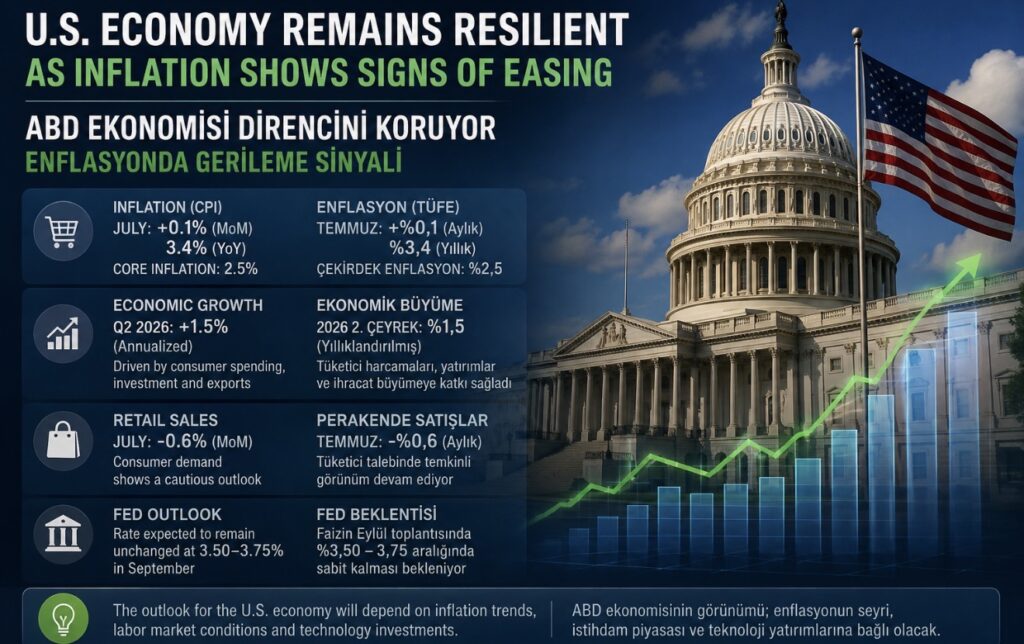
ABD Çalışma İstatistikleri Bürosu (BLS) verilerine göre, Tüketici Fiyat Endeksi temmuz ayında aylık yüzde 0,1 artarken, yıllık enflasyon yüzde 3,5’ten yüzde 3,4’e geriledi. Gıda ve enerji hariç çekirdek enflasyon ise yüzde 2,5 olarak gerçekleşti.
ABD ekonomisi yılın ikinci çeyreğinde yıllıklandırılmış bazda yüzde 1,5 büyüdü. Büyümeye tüketici harcamaları, yatırımlar ve ihracat katkı sağladı. Buna karşılık temmuz ayında perakende ve gıda hizmetleri satışlarının aylık yüzde 0,6 gerilemesi, tüketici tarafında daha temkinli bir görünüm ortaya koydu.
Piyasaların odağında ise ABD Merkez Bankası’nın (Fed) önümüzdeki dönemde izleyeceği para politikası bulunuyor. Reuters’ın 17 Ağustos tarihli ekonomist anketinde büyük çoğunluk, Fed’in politika faizini yüzde 3,50–3,75 aralığında sabit tutmasını bekliyor.
Son veriler, ABD ekonomisinde büyümenin sürdüğünü ancak hızın yavaşladığını gösteriyor. Enflasyonun seyri, istihdam piyasası ve teknoloji yatırımları önümüzdeki dönemde ABD ekonomisinin yönünü belirleyecek temel göstergeler olacak.
U.S. Economy Remains Resilient as Inflation Shows Signs of Easing
The U.S. economy entered the second half of 2026 on a resilient footing despite global uncertainties and continued interest-rate pressures. A modest easing in inflation, investment activity and consumer spending remain key factors shaping the economic outlook.
According to data from the U.S. Bureau of Labor Statistics (BLS), the Consumer Price Index rose 0.1 percent in July from the previous month, while annual inflation eased to 3.4 percent from 3.5 percent. Core inflation, which excludes food and energy, stood at 2.5 percent.
The U.S. economy grew at an annualized rate of 1.5 percent in the second quarter. Consumer spending, investment and exports contributed to growth. However, retail and food services sales declined 0.6 percent in July from the previous month, pointing to a more cautious picture on the consumer side.
Markets are now focused on the Federal Reserve’s monetary policy outlook. According to a Reuters survey of economists published on August 17, a large majority expect the Fed to keep its policy rate unchanged at 3.50–3.75 percent.
The latest data indicate that the U.S. economy continues to expand, although at a slower pace. Inflation trends, labor market conditions and technology investment will be among the key factors determining the direction of the U.S. economy in the period ahead.